 FREE SHIPPING £75+
 CELEBRATING 50+ YEARS
 PRICE MATCH GUARANTEE
EMI Receivers / EMI Analysers
An EMI Test Receiver (or EMC Analyser) is a specialised high-performance radio receiver designed specifically to measure electromagnetic interference in accordance with international standards like CISPR, EN, and FCC. While a standard spectrum analyser sweeps frequencies to show general signals, an EMI receiver uses specific filters and detectors to mimic how interference actually affects radio and telecommunications equipment.
Why Choose an EMI Receiver?
Standard-Compliant Detectors: They include "Quasi-Peak" and "Cispr-Average" detectors. These weight the interference based on its repetition rate, which is the only way to determine if a product legally passes or fails emissions standards.
Superior Dynamic Range: Designed with robust "front-end" protection and pre-selection filters, these receivers can detect tiny interference signals even in the presence of much stronger ambient radio stations without becoming overloaded.
Precise Bandwidths (RBW): They feature the exact 200Hz, 9kHz, and 120kHz resolution bandwidths required by CISPR standards, ensuring that measurements are mathematically identical to those taken at a certified test house.
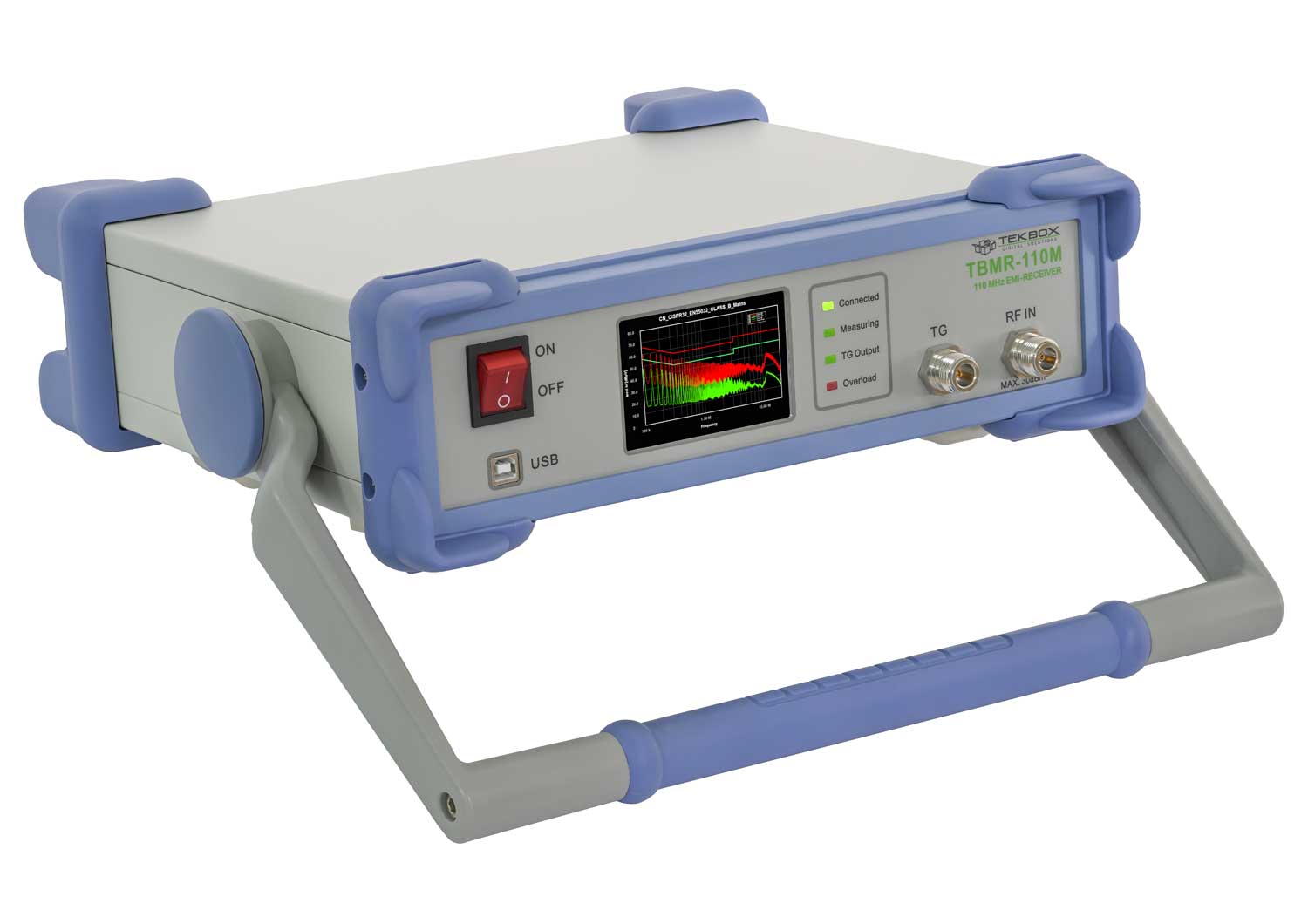
Time-Domain Scanning: Modern receivers (like the Tekbox TBMR-110M) can scan wide frequency ranges almost instantaneously using FFT (Fast Fourier Transform) technology, drastically reducing the time required for a full compliance sweep.
Core Applications
Conducted Emissions (DC to 30MHz): Paired with a LISN (Line Impedance Stabilisation Network) to measure the noise a device sends back into the mains power grid or data lines.
Radiated Emissions (30MHz to 6GHz+): Connected to an EMC antenna to measure "airborne" noise leaking from a product's enclosure or internal cables.
Pre-Compliance Troubleshooting: Identifying specific "noisy" frequencies during the design phase so they can be filtered out before the product is sent for expensive final certification.
Diagnostic Signal Analysis: Using "Zero-Span" mode to look at the pulse characteristics of a single interference source, helping engineers determine if the noise is coming from a switching power supply, a microprocessor clock, or a motor.
Showing the single result
-
Tekbox TBMR-110M EMI Test Receiver / Analyser DC-110 MHZ
£6,011.00 (£7,213.20 inc. VAT)Available on back-order
Availability: Stock models delivered next working day (UK only) for orders placed before 16:30 (Mon - Fri)
Add to basket